Most couples choose a makeup artist from a portfolio. It is the obvious way to do it, and it is also the reason so many brides look at their photographs afterwards and think the makeup looked better in the mirror than it does on screen.
A wedding day makeup artist is not doing the same job as the person who does your makeup for an evening out. They are working to hold for twelve hours, in heat, through tears and under a camera flash. They are also working on skin that will very likely be a slightly different colour from the one they matched at the trial. This guide is about choosing someone who understands that, and briefing them properly.
We plan and coordinate weddings across Spain, Portugal, Italy, Greece, Malta, Cyprus and the UK, and we are on site from the moment styling begins. What follows is what we see work.
What makes wedding makeup different
Three things, and each one changes the products and the technique.
- It has to last. Your makeup goes on at ten in the morning and is still working at eleven at night, through a ceremony, a meal and a dancefloor
- It is photographed constantly, often with flash, and in bright daylight that shows every edge and every mismatch
- It has to survive emotion. Almost everyone cries at some point, and the products that cope with that are not the ones most of us own
An artist who works in weddings builds around those constraints. One who mainly does editorial or evening makeup may produce something beautiful that does not hold past the drinks reception.
The SPF problem nobody mentions
This is the single most useful thing in this article, and it catches people out every season.
Many foundations, primers and moisturisers contain SPF, usually as titanium dioxide or zinc oxide. Those ingredients reflect light. In daylight you will never notice. Under a camera flash they bounce the light straight back, and your face photographs several shades lighter than your neck and chest, with a pale cast that no amount of editing fully removes.
It is entirely avoidable. Ask your artist to use SPF free products on your face on the day, and check your own skincare that morning too, because a tinted moisturiser applied before they arrive will do the same thing. If you are marrying outdoors in high summer this feels counterintuitive, so the practical answer is sun protection on your body and shoulders, none on your face, and shade wherever the timeline allows.
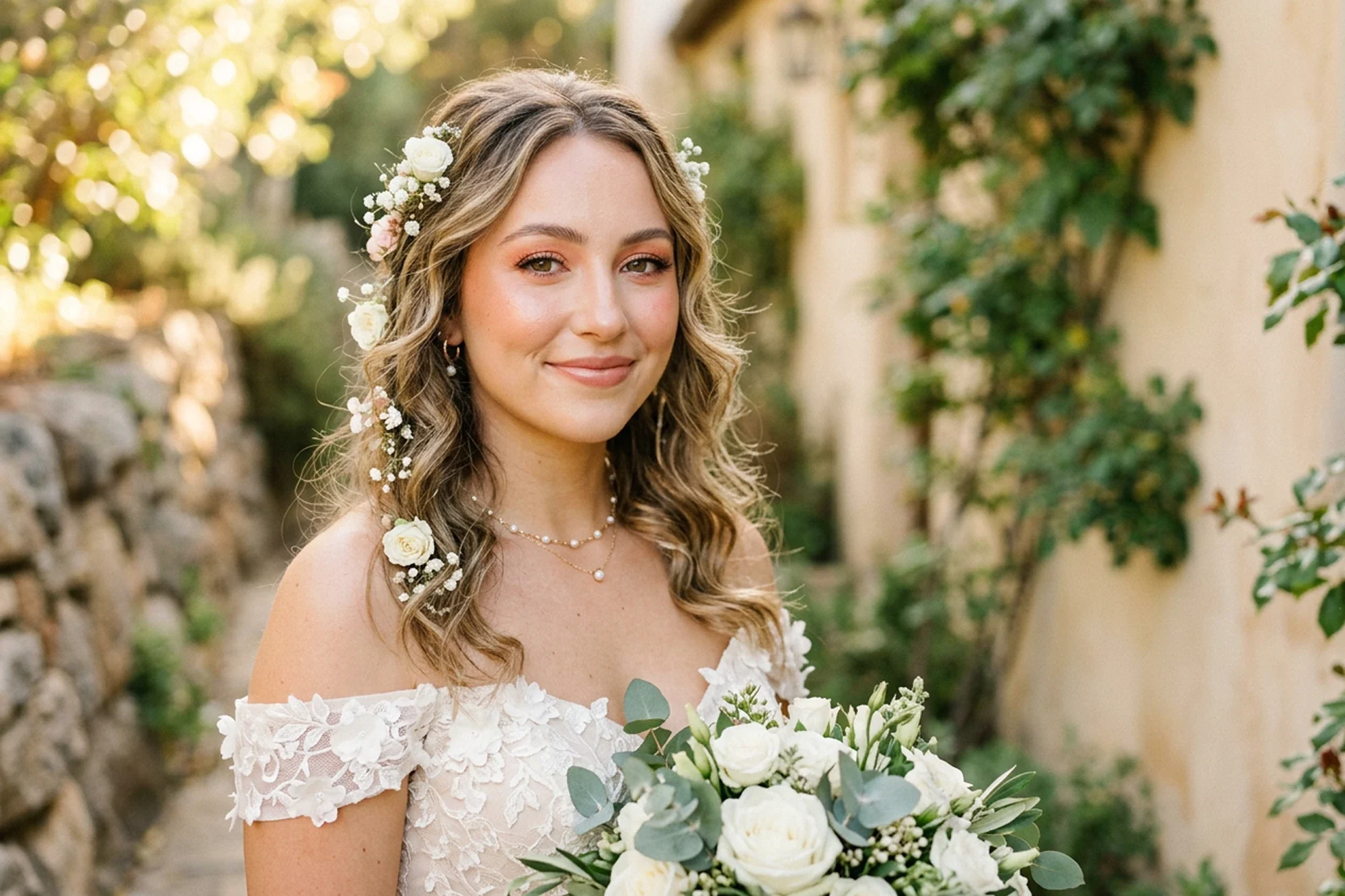
Heat, humidity and staying power
At thirty degrees, makeup moves. Skin produces oil, foundation separates around the nose and chin, and anything cream based slides. The techniques that hold are the ones built for it: thorough skin prep, a gripping primer, thin layers built up rather than one heavy one, and proper setting with powder and a setting spray.
Long wear and transfer resistant foundation matters more than the brand name. So does waterproof mascara, which is not a stylistic choice at a wedding but a practical one. A tinted lip stain under a gloss or balm outlasts lipstick alone by hours, and it survives a meal, which lipstick does not.
Ask for a touch up kit before your artist leaves. Blotting papers, your lip colour and a small powder, handed to whoever is carrying your bag. That is usually all the maintenance a well built face needs across an entire day.
Trials, and doing one from another country
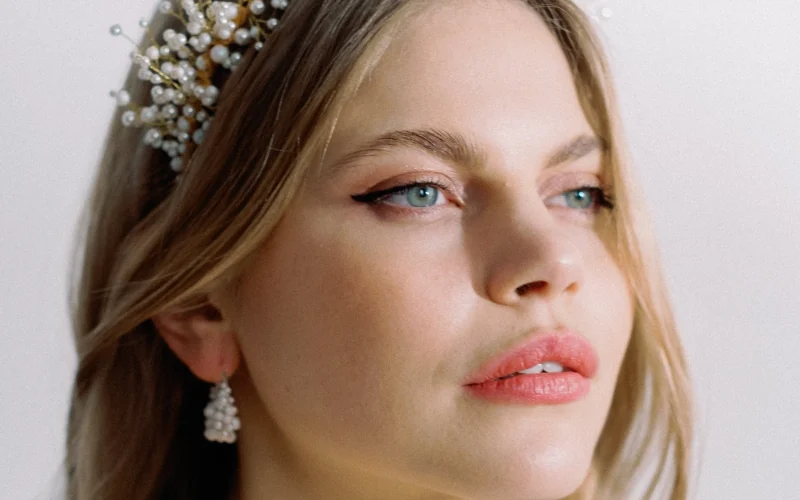
A trial is where the makeup is actually decided, and most of our couples are planning from abroad, so it needs handling deliberately.
If you can, trial in person a few days before the wedding, or on a venue visit. Ask for it to be done in daylight rather than under artificial light, then photograph the result on your phone with the flash on. That single test will tell you more about how the makeup will photograph than an hour of looking in a mirror.
If you cannot get out beforehand, trial at home with a local artist, photograph it thoroughly in daylight and with flash, and send those images to your artist at the destination along with a note of what you liked and disliked. Reference photographs of other people are far less useful than photographs of your own face.
Wear a white or ivory top for your trial. Colour reflects upwards, and makeup that looks balanced against a black t-shirt can read very differently against a wedding dress.
She took the time to understand exactly what we wanted and created a planning experience that was organised, enjoyable and completely stress free.
Skin preparation in the weeks before
Good makeup sits on well prepared skin, and this part is entirely within your control.
- Book any facial at least two weeks out, never in the final week, because reactions and purging are common and unpredictable
- Avoid new active ingredients such as retinol or acids in the month before, and do not start anything new in the final fortnight
- Keep hydration steady and simple rather than adding products, because a changed routine is a risk with no upside
- Be careful with tanning. If you are having a spray tan, do it three days before and tell your artist the shade, since matching foundation to a tan they have not seen is guesswork
- Remember that you may arrive at a hot destination several days early and pick up natural colour. Tell your artist, so they bring the right depth of foundation
Timings on the morning
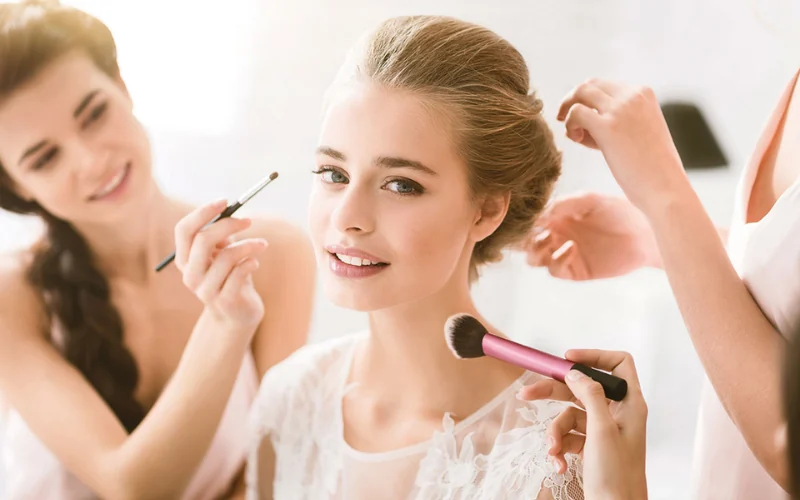
The running orders we build usually start hair and makeup at around ten for an afternoon ceremony. Beyond that, a few rules keep the morning calm.
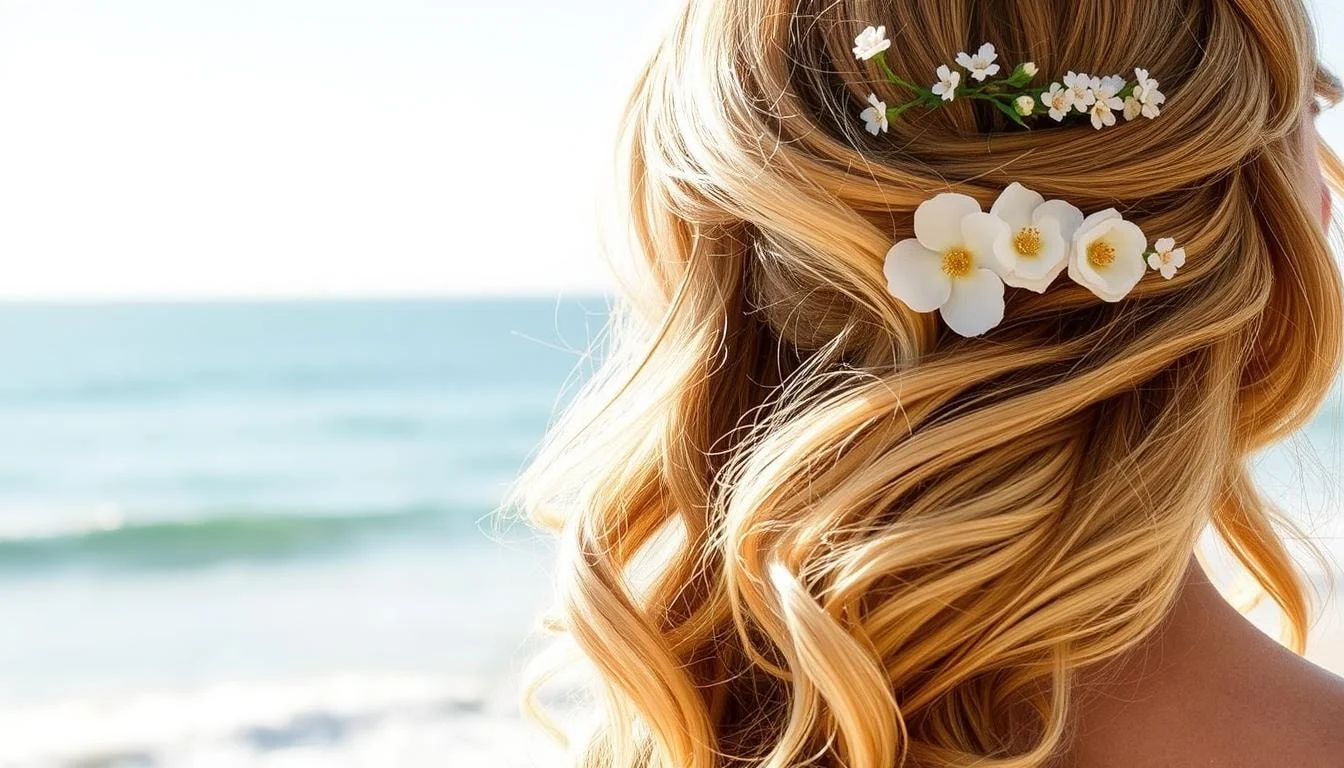
Allow a full hour for the bride and about forty minutes per additional person. Go last among your party so your face is freshest at the ceremony, and pair this with the same principle for hair, which we cover in our guide to the perfect beach bride hairstyle.
Get ready in a room with good natural light if you possibly can. Hotel bathrooms are the worst possible environment for colour matching, and an artist working under warm artificial light is working blind. A table by a window is better than any ring light.
What a wedding makeup artist costs
Prices vary by country and by the size of your party, but the ranges are reasonably consistent across the destinations we work in.
- Bridal makeup on the day: roughly €150 to €300 in Spain, Portugal and Greece, and £150 to £350 in the UK and Ireland
- Hair and makeup together: roughly €280 to €500, and £280 to £600 in the UK
- Bridesmaids and mothers: €60 to €110 per person, usually less as part of the same booking
- Trials: commonly €80 to €150, often deducted from the balance if you go on to book
- Early starts, travel to rural venues and staying on for a touch up before the evening all carry supplements
These are indicative figures for guidance and they move with season, location and party size. We build the real numbers into your budget when we source your suppliers, and you can see how hair and makeup sits alongside everything else on our wedding packages and prices page.
How to choose the right artist
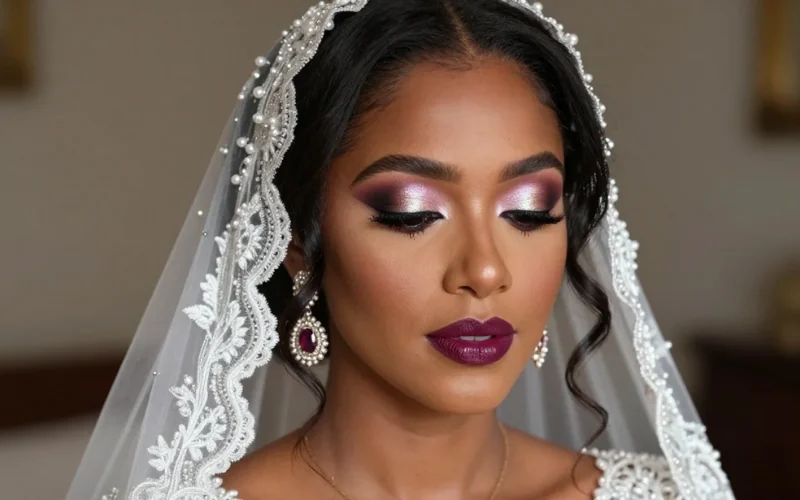
Questions worth asking
Portfolios are marketing. They are shot in good light, on models, and often retouched. Useful questions get you further.
- Ask to see photographs from a full wedding rather than a gallery of favourites, and ideally some taken late in the evening
- Ask how many weddings they do a year, and whether they have worked at your venue or in your region
- Ask what they use for longevity in heat, and whether their products are SPF free
- Ask whether they work on your skin type and tone specifically, and look for examples
- Ask what happens if they are ill, because a professional will have a named cover arrangement
Cover, and why it matters
That last question matters more than people expect. A single artist with no backup is a genuine risk on a date you cannot move.
The room you get ready in matters more than you think
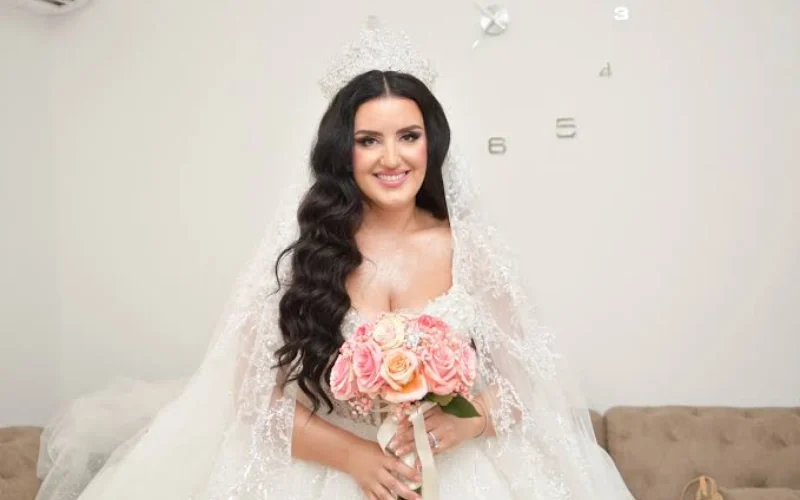
This is the part couples never think about when booking, and the part our artists mention most often afterwards.
Makeup is colour matched to whatever light it is applied in. A hotel bathroom lit with warm downlights will produce a face that looks correct in that room and noticeably too warm outdoors. A north facing window and a table is a better working environment than any professional lamp, and it costs nothing.
Some venues solve this and some do not, and it is worth asking before you book rather than discovering it on the morning. When we tour venues with couples we look at the getting ready space specifically: whether there is natural light, whether there is room for two artists to work at once, whether there is somewhere to hang the dresses, and whether the photographer can move around without standing in the light. A beautiful venue with a windowless side room is a genuine compromise, and one worth knowing about in advance.
If you are still choosing, our wedding venues pages and our venue and vendor sourcing service both take this into account, because it affects the photographs far more than most couples expect.
Working with your photographer
Your makeup artist and your photographer and videographer are solving the same problem from opposite ends, and they rarely speak to one another unless someone arranges it.
Two things are worth agreeing in advance. Whether the photographer is shooting with flash, since that determines the SPF question and how much powder is sensible. And whether they want getting ready photographs, or whether you are also using content creators filming through the morning, because if so the room needs to be tidy and the light needs to be good, and your artist needs to know they are being photographed while they work.
When we plan a wedding we brief both, along with the venue, so the morning runs as one schedule rather than three.
A short checklist
Is your artist experienced in weddings specifically, not just makeup? Are their products SPF free and built for longevity? Have you trialled and photographed the result with flash? Have you told them about any tan, natural or otherwise? Do you have a touch up kit and someone carrying it? And is there a cover arrangement if they cannot make it?
Six yeses and your makeup will look as good at midnight as it does at midday.
If you would like us to source, book and brief your makeup artist alongside the rest of your suppliers, that is part of what our wedding planning service covers, and our on-the-day coordination team is there through the morning keeping everything to time. Get in touch and we will talk it through.