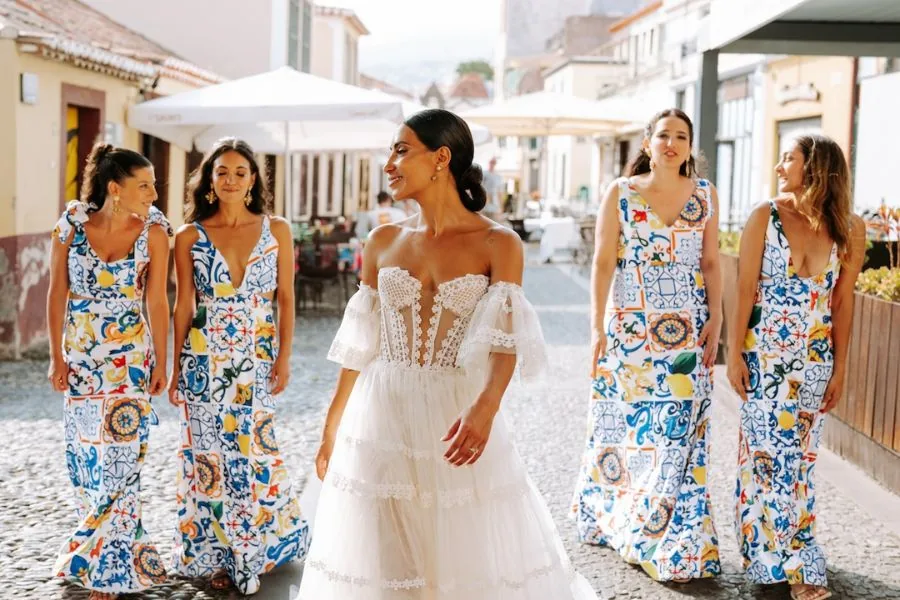
Winter Weddings
Winter weddings across the UK and Europe
Fewer than one in ten couples marry in winter. That is exactly why it is worth considering.
Winter is the quietest season in the wedding calendar, and every part of the industry reflects that. Around 7 per cent of UK couples marry between December and February, against 40 per cent in summer. January is the single quietest month of the year at 2.6 per cent of all marriages.
What that means in practice is straightforward: the venue you want is far more likely to be free, the photographer you want is far more likely to be available, and the whole thing costs meaningfully less. Off-peak dates commonly save 30 to 40 per cent on venue hire, and you avoid peak Saturday surcharges that can run £3,000 to £8,000 at popular venues.
There are real trade-offs, and we would rather set them out than sell around them. Daylight is short, so the timeline has to be built around the light rather than the other way round. Anything outdoors needs an indoor answer that you would genuinely be happy with. And if you are asking guests to travel, winter weather can disrupt journeys in a way that August does not.
What a winter wedding gives you
Your first-choice venue
Summer Saturdays at good venues go eighteen months out. In January and February you can often have the date you actually want at the place you actually want, and negotiate on top.
See our venues →Thirty to forty per cent less
Off-peak venue hire is substantially cheaper, and the same is true of many suppliers. The saving is often the difference between the wedding you planned and the one you compromised on.
See our prices →Suppliers who have time for you
In August the best photographers, florists and caterers are turning work away. In winter they are choosing between fewer jobs, and you will feel the difference in the attention you get.
How we plan it →Benefits couples do not expect
The savings and the availability are the obvious arguments. These are the ones couples tell us about afterwards, having not thought of them beforehand.
- More of your guests actually come: a winter date does not compete with summer holidays, half term or the three other weddings everyone has been invited to that August
- The light is better than you think: the sun sits low all day, so you get soft, directional light from mid-morning rather than a two-hour window at dusk, and golden hour lands at a sociable time
- Venues look their best: open fires, candles down the length of a table and a room lit rather than daylit. Country houses and castles were built for exactly this
- Seasonal food is better value: game, root vegetables, slow-cooked dishes and mulled drinks cost less than a summer menu and suit a long dinner far better
- Flowers cost less and last longer: foliage, berries, dried stems and hellebores are in season and hardy, where summer blooms wilt in heat and are priced at their peak
- Travel is cheaper for everyone: flights and hotels for you and your guests are at their lowest between January and March, which matters if people are coming from abroad
- You get more of your suppliers' attention: a photographer shooting forty weddings a summer is shooting a handful in February, and you will feel the difference in the planning
- The honeymoon works better too: leaving in winter opens up long-haul destinations at their best, rather than going somewhere in August because that is when the wedding was
Winter weddings at home
The UK does winter weddings well, because the venues were built for it. Country houses with open fires, castles with stone halls, barns with heating and long tables: none of these needs sunshine to work. The look is different too. Candlelight, deep colours, foliage and berries rather than pale summer flowers, and a dinner that starts when it is already dark outside.
Build the day around the light. In late December the sun sets before four o'clock in most of England and earlier in Scotland. That means an earlier ceremony, usually around noon or one, with photographs immediately afterwards while the light holds. It is a tighter timeline than a summer wedding and it needs to be planned properly rather than assumed.
December is not one month. Weddings cluster mid-month and in the quiet days between Christmas and New Year. The week before Christmas is difficult for guests and expensive for accommodation. New Year's Eve is a wonderful date and priced accordingly.
| Season | Share of weddings | What to expect |
|---|---|---|
| Summer, June to August | 40% | Peak pricing, least availability, longest days |
| Autumn, September to November | 28% | Good light, softening prices, September now the fastest-growing month |
| Spring, March to May | 25% | Rising demand, unpredictable weather, good value early on |
| Winter, December to February | 7% | Best availability and the lowest prices of the year |
Season shares from the 2026 UK wedding reports. January is the quietest single month of the year, at 2.6 per cent of all marriages.
What winter actually looks like
Average daytime highs through the winter months, comparing southern England with the Costa del Sol. The gap is larger than most couples expect.
| Month | Southern England | Costa del Sol | Difference |
|---|---|---|---|
| November | 12°C | 20°C | +8° |
| December | 9°C | 16°C | +7° |
| January | 9°C | 17°C | +8° |
| February | 9°C | 17°C | +8° |
| March | 12°C | 19°C | +7° |
London figures from Met Office long-term averages; Costa del Sol from Spanish climate records for the 1991 to 2020 period. Both are averages across many years rather than a forecast.
What the numbers do not show. Nine degrees in England with rain and a four o'clock sunset feels very different from nine degrees in bright sun. The Costa del Sol has around 3,000 hours of sunshine a year and frost is genuinely rare, so a January lunch outdoors in the sun is comfortable in a way a January lunch in Hampshire is not.
Be realistic about the evenings. Even at seventeen degrees in the day, southern Spain drops to six or seven overnight, and the sea sits at sixteen. Dinner will be inside, or under cover with heaters. Plan for that from the start rather than hoping for an unusually warm night.
Rain is the variable, not cold. November and December are the wettest months on the Costa del Sol, at around 100mm each, though it tends to arrive in short showers between sunny spells rather than settling in for the day. February is the other wet month. January is often the driest and brightest of the three.
Tell us your date and we will check what is free.
Winter dates move quickly once couples realise what they save. A first conversation costs nothing.
Marrying abroad in winter
If you want warmth rather than candlelight, southern Spain and the islands stay mild all winter, and the venues are empty.
The Costa del Sol, Cádiz and the Canaries hold up through the winter months in a way the rest of Europe does not. You are not getting a summer wedding: the sea is cold, the evenings need a jacket and an outdoor dinner in January is optimistic. What you are getting is bright, comfortable days, clear light for photographs, and estates that would be booked solid in July standing empty and priced accordingly.
Two practical points. Not every venue opens year round, and several of the ones we work with in Puglia and the Salento close between November and March, so the shortlist is shorter. And the legal requirements do not change with the season: if you are marrying legally in Italy or Portugal, the paperwork takes the same nine to twelve weeks in December as it does in June.
Winter weddings in Spain
Where to marry between November and March, which venues stay open, and what the weather actually does on the Costa del Sol and in Andalucía.
Read more →Costa del Sol venues
Beach clubs, fincas and hilltop estates from Estepona to Nerja, many of them open year round and considerably cheaper out of season.
Explore →UK venues
Country houses, castles and barns built for open fires and long dinners, with no flights for your guests and no paperwork to translate.
Explore →Our ten best winter wedding locations
Ranked by what they actually give you in December, January and February, not by how they look in a summer photograph. Temperatures are average January daytime highs.
| Where | Jan high | Why it works | Worth knowing |
|---|---|---|---|
| 1. Tenerife | 20°C | The most reliable warmth in Europe, with six to seven hours of sun a day and a four-and-a-half-hour flight | Not low season, so no discount. The north of the island is cooler and wetter than the south |
| 2. Gran Canaria | 21°C | Slightly warmer than Tenerife, with dunes, beaches and pine forest within an hour of each other | Peak season for European visitors. Book early and expect summer pricing |
| 3. Costa del Sol | 17°C | Genuinely low season, so hire rates drop. Two and a half hours from the UK, with the widest choice of venues we work with | Mild rather than warm. Evenings need a jacket and dinner will be inside |
| 4. Lanzarote | 21°C | The driest of the Canaries in January, with around 15mm of rain across the whole month and striking volcanic scenery | Fewer traditional wedding venues than Tenerife or Gran Canaria |
| 5. Cádiz & Sotogrande | 16°C | The quiet half of Andalucía, with country estates at noticeably lower prices than the coast an hour east | More rain than the Canaries, and the Levante wind can blow on the Atlantic side |
| 6. Madeira | 20°C | The island of eternal spring, subtropical gardens and dramatic cliffs, with mild weather all winter | Fewer direct flights than the Canaries, and hillier ground for guests |
| 7. Cyprus | 18°C | One of the few places in Europe where eating outdoors in January is comfortable, with Roman ruins and seafront venues | A four-and-a-half-hour flight, which is a long way for a short winter break |
| 8. Malta & Gozo | 16°C | The warmest winters of any European capital, limestone palazzos, and English spoken everywhere | Compact, so venue choice is limited and the good ones book early |
| 9. English country houses | 9°C | Open fires, stone halls and long candlelit dinners. The venues were built for exactly this, and there is no paperwork to translate | Under eight hours of daylight in December, so the timeline has to be built around the light |
| 10. Scotland | 7°C | Castles, lochs and genuine winter drama, with the simplest marriage law in the UK and the possibility of snow | Darker still than England, and winter travel can be disrupted in the Highlands |
Temperatures are average January daytime highs from long-term climate records. The Canary Islands, Madeira, Cyprus and Malta are winter-sun destinations, so demand and pricing hold up; mainland Spain and the UK are genuinely off-peak, which is where the savings are.
The trade-off, plainly. The warmest destinations are the ones that do not discount, because January is their high season. The cheapest are the ones where you will be indoors by six. Somewhere like the Costa del Sol sits between the two: mild enough for a comfortable afternoon outside, genuinely low season on price, and close enough that guests are not spending a day travelling.
Italy is not on this list, and that is deliberate. Several of the estates we work with in Puglia and the Salento close entirely between November and March. Tuscany and the Lakes are beautiful in winter but cold, and many venues shut. If you have your heart set on Italy, we would talk to you about April or October rather than January.
Winter Wedding Questions
Costs and seasonal figures reviewed August 2026.
Is winter a good time of year to get married?
+
It suits some couples enormously and others not at all. What winter gives you is availability and value: only 7 per cent of UK couples marry between December and February, against 40 per cent in summer, so the venue you want is far more likely to be free. What it takes away is daylight and the freedom to plan outdoors. If your picture of the day is drinks on a lawn until eight in the evening, winter is the wrong season. If it is candlelight, open fires and a long dinner, the venues were built for exactly that.
What are the advantages of having a winter wedding?
+
Availability comes first. A summer Saturday at a good venue is booked eighteen months out; a January date is often free six to nine months ahead, and so are the photographers and bands who would otherwise be turning work away. Cost comes second. Off-peak hire commonly runs 30 to 40 per cent below the summer equivalent, and you avoid peak Saturday surcharges of £3,000 to £8,000. At an average of £272 a head in the UK, that saving alone covers twenty extra guests. Then the advantages couples tell us about afterwards, having not thought of them beforehand. A winter date does not compete with summer holidays, half term or the three other weddings everyone has that August, so attendance is usually higher. The sun sits low all day rather than only at dusk, which photographers generally prefer. Seasonal produce and hardy flowers cost less and hold up better through a long day in a heated room. And flights and hotels are at their cheapest between January and March, which matters when guests are travelling.
Are winter weddings cheaper than summer weddings?
+
In the UK, almost always. Winter is genuinely off-peak: hire rates drop, Saturday surcharges disappear, and suppliers have capacity. Abroad it depends entirely on the destination, and this is where couples get caught out. Southern Spain treats November to March as low season and prices accordingly. In Puglia the difference is roughly €500 on the main wedding day and €1,500 a night on accommodation. The Canary Islands are the opposite: Europeans go to Tenerife and Gran Canaria precisely for winter sun, so demand holds through January and a winter date may cost what a June one does. There are also costs that only exist in winter, and they belong in the comparison. Heating, whether it is included or billed separately. Additional lighting, because the room has to work from four o'clock rather than nine. Covered walkways, umbrellas, blankets. They rarely cancel out the saving, but a couple who budget for a summer wedding and simply move the date will be caught short.
Are winter weddings better value for money?
+
Value and price are different questions, and value is the more useful one. Venue and catering account for 45 to 51 per cent of a typical UK wedding budget, so a 30 to 40 per cent reduction on the largest line changes what the rest of the budget can do. What you save on hire can go into the photographer, the food or the flowers instead. It is also leverage: a venue with an empty January diary will negotiate in a way it never would for July, particularly on a Friday, Sunday or weekday. When you compare two dates, insist on a complete quotation rather than the hire fee, covering catering, drinks, staffing, furniture, heating, lighting, accommodation and any minimum numbers. A venue that looks cheaper on hire alone is often dearer once those are added, and that is the single most common mistake we see.
What is the best country for a winter wedding?
+
There is no single answer, and we would be wary of anyone who gave you one. Decide what you want the day to feel like, then choose the country. For warm winter weather, the Canary Islands are the strongest option in Europe: Tenerife and Gran Canaria are subtropical and hold up through January in a way the mainland does not. For Mediterranean character with mild rather than warm weather, southern Spain works well, with daytime highs of 16 to 17 degrees against 9 in southern England. Cyprus and Malta are worth considering for sunshine and historic venues. And if you want a genuinely wintry wedding with fires and dark afternoons, the UK does it better than anywhere, with no paperwork to translate and no flights for your guests. One warning: Spain is not one climate. A January wedding in Tenerife, one in Marbella and one in Madrid are three entirely different propositions.
What should we consider when choosing a winter wedding venue?
+
The indoor spaces, which matter far more than in summer. In July a mediocre room is forgivable because everyone is outside. In January it is where the whole day happens, so you need to like it, and it needs to hold your full guest list through ceremony, drinks, dinner and dancing without anyone being moved somewhere worse. Then the practical things we check on every winter viewing: whether the routes between spaces are covered, whether heating is included in the hire fee or billed separately, when it gets switched on, and how early the light goes in that particular room. Ask what the venue's own wet-weather plan is, then go and stand in it. If it turns out to be a corridor, or a marquee that is not there yet, you have your answer.
Can we have an outdoor wedding ceremony in winter?
+
In the UK, rarely, and we would not build a day around it. Abroad it is a real option on a good day in southern Spain or the Canaries, though the evening will be indoors regardless: even at 17 degrees in the afternoon, the Costa del Sol drops to 6 or 7 overnight and the sea sits at 16. The better approach is to choose a venue whose indoor ceremony space you genuinely love, then treat outdoors as a bonus if the day turns out well. That is the reverse of how we would advise you in June, and it is the biggest adjustment for couples moving a summer plan into winter.
What happens if the weather is cold, wet or windy on the day?
+
Nothing you should notice, if the plan was made months earlier. A winter wedding should never depend on the weather. What we put in place is an indoor alternative for the ceremony, the drinks and the photographs; covered routes between spaces; heating agreed in writing rather than assumed; umbrellas and blankets on hand; and a call time in the morning for the decision, with one named person making it. That last part matters more than the rest. The failure is not rain. It is three people debating at eleven o'clock whether to move the ceremony while the chairs are still outside. On the Costa del Sol, November and December are the wettest months at around 100mm each, though it tends to arrive as short showers between sunny spells rather than settling in.
Is there enough daylight for photographs?
+
Yes, if the day is built around it. In late December, daylight in southern England falls below eight hours and the sun sets close to four o'clock, so we would put the ceremony at midday or one and take the photographs straight afterwards. Good photographers often prefer winter light: the sun stays low all day, giving soft, directional light from mid-morning rather than a narrow window at dusk. In Málaga you get about ten hours of daylight in January, roughly five of them bright sunshine, close to three times what the UK sees in December. What does not work is a four o'clock ceremony and an assumption it will be fine.
What should guests wear to a winter wedding?
+
Tell them, and be specific. If any part of the day is outside, put a line on the invitation: 'the ceremony is outdoors, weather permitting, so please bring a warm layer.' Mention if anyone will be standing on grass. Guests get this wrong far more often than they get the dress code wrong.
What flowers and decorations work best for a winter wedding?
+
Work with the season rather than against it. Trying to recreate a summer garden in February is expensive and never quite convinces. Anemones, amaryllis, hellebores and roses are in season, and they last far better through a long day in a heated room than summer blooms, which wilt. Foliage, berries and dried stems do a great deal for very little. On colour, deep tones suit the light: burgundy, forest green, plum and ivory against candlelight, or white, cream and gold for something lighter that does not tip into Christmas. The real decision is lighting. With so few hours of daylight, how the room looks after four o'clock matters more than what is on the tables.
What food and drinks work best at a winter wedding?
+
Winter is the better season for wedding food, and it is the argument we make most often to couples on the fence. Slow-cooked meat, root vegetables, rich sauces and proper puddings suit a long dinner in a way a summer menu does not, and cost less because the ingredients are in season. A warm drink on arrival changes the whole start of the day: mulled wine, spiced cider, hot chocolate for the children, and something non-alcoholic that is not an afterthought.
How do we make a winter wedding feel warm rather than cold?
+
Warmth is atmosphere as much as temperature, and the two need attending to separately. On temperature: heating agreed in writing, blankets out, and nobody standing outside longer than a photograph takes. On atmosphere: candles do more than anything else for the money, because they come into their own exactly as the daylight goes. Lamps rather than overhead lighting. A lounge area with soft seating so guests gather instead of sitting formally all evening. Think about the first two minutes a guest experiences: somewhere to put a coat, a warm drink in hand, and a room that looks lit rather than merely bright.
Do you offer winter wedding planning services?
+
Yes, and we plan a good number of them. The service is the same as any other time of year, with a few things that matter more: heating and lighting written into the venue contract rather than assumed, a wet-weather plan we have actually stood in, and a timeline built backwards from sunset instead of forwards from the ceremony. Planning is charged at €60 per hour plus VAT, so you pay for the time your wedding actually takes rather than a flat fee. Coordination starts at €750 for a half day and €1,400 for a full day plus VAT, for couples who have planned it themselves and want someone to run the day. We also source venues and suppliers on their own, which is often where a winter wedding starts, because knowing which places genuinely work in January is half the problem.
Which countries do you offer winter weddings in?
+
The United Kingdom, Spain and Italy, which is where we work year round, and we will plan in Portugal, Greece, France, Cyprus and Malta for couples who want them. For winter specifically the shortlist is shorter than the list, because not everywhere stays open. Southern Spain and the Costa del Sol are the mainstay: mild, well served by flights and genuinely low season, so prices drop. The Canary Islands are the warmest option in Europe in January, though they do not discount, because that is their high season. The UK is the best of the lot for a properly wintry wedding and the simplest legally. Italy we would steer you away from between November and March unless you have a specific venue in mind, since several of the estates we work with in Puglia close entirely until April.
Which winter months are best?
+
For value and availability, January and February. January is the quietest month of the entire year at 2.6 per cent of UK marriages, against 14.3 per cent in August. For atmosphere, early December, when venues are dressed and there is a natural sense of occasion, though it competes with Christmas parties for supplier availability. The days between Christmas and New Year are popular because guests are already off work. New Year's Eve is spectacular and priced as such. Abroad, February and March are usually brighter and drier on the Costa del Sol than November and December.
Do venues close in winter?
+
Some do. Several of the estates we work with in Puglia and the Salento open April to October only, so a January wedding there is simply not available. In the UK almost everything stays open. In southern Spain it varies, and a venue that is technically open may have its pool drained and half its rooms shut. Ask to see photographs from the month you are considering, not from June.
How far ahead do we need to book a winter wedding?
+
Six to nine months is often enough, against eighteen for a July Saturday. Two things do not shorten though: legal paperwork abroad, which runs to nine to twelve weeks in Italy whatever the season, and the best photographers, who are booked a long way out in any month.
If you have any further questions, please view our FAQs or contact us.
Tips, ideas & inspiration
Advice and inspiration from the weddings and events we plan across Europe and the UK.
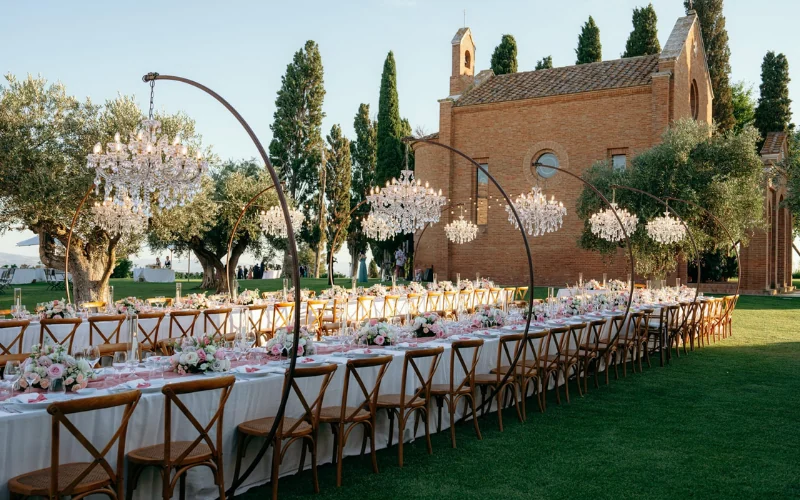
Wedding Lamps and Lighting on the Costa del Sol
Festoon, fairy lights, lanterns and uplighting, what each costs on this coast, and what your venue can actually take.
Read article →
Choosing Your Wedding Day Makeup Artist
Why SPF ruins flash photographs, what makeup actually costs abroad, and how to trial and brief an artist properly.
Read article →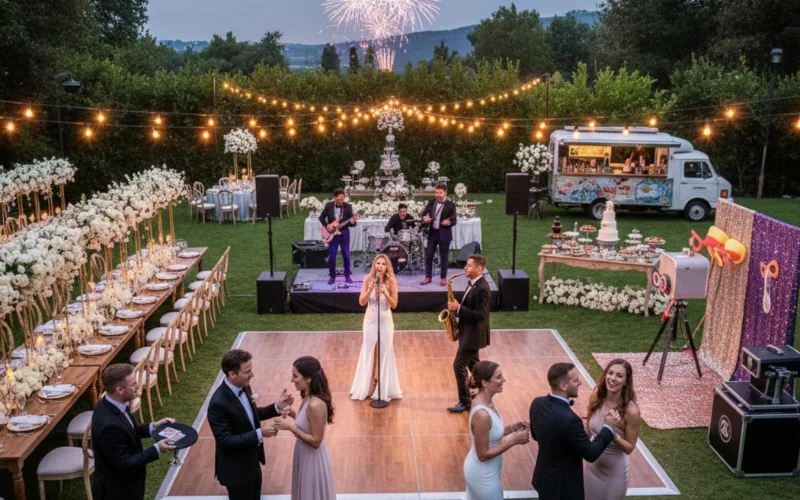
The Best Wedding Entertainment Ideas for a 2027 Wedding
From ceremony musicians and mobile bar services to booths, DJs and late night food, what actually works and roughly what it costs.
Read article →Read more from our Wedding Blog